
Washington Must Prepare for New Era of Budget Volatility
I appreciate Seattle Times columnist Danny Westneat as something rare in the modern media landscape: an equal-opportunity gadfly who goes after the weak spots on both ends of the political spectrum. His piece yesterday was a miss, however, and it’s important to Washington’s long-term fiscal health to understand why.
The crux of his argument:
That conundrum that keeps happening with the rich is happening again. They are said to be leaving this state. Yet collections for a tax on wealth have smashed records — again. …
“This morning we got the updated numbers for fiscal year 2026 for capital gains … it came in at $1.5 billion,” economist Dave Reich told state lawmakers earlier this month. “So a very significant increase, quite a bit above our forecast from what we had before.” …
The most logical explanation is simpler: The rich around here are just really rich and getting richer. Some are leaving but the rest are getting far richer, faster, than the tax estimators can keep up with.
There is good reason to be skeptical of claims that the new taxes on high earners will drive lots of rich people out of Washington state. That’s not generally consistent with the research. There are lots of ties that bond people to their communities, beyond the top marginal tax rate. And as more states adopt similar policies, Washington will become less of an outlier. Not everyone wants to live in Florida.
But these new taxes on capital gains and exceptionally high incomes are also much more volatile sources of revenue than property tax or, to a lesser extent, sales tax. Capital gains are deeply dependent upon the performance of the stock market. Earned income fluctuates year-to-year far more than property values.
Big picture, this means that in the future we should expect Washington’s tax collections to look a bit more like California’s: very high in boom years, significantly lower when the economy slows down. The worst thing the legislature could do is assume a good year of capital gains will carry on consistently. That’s the mistake California made, when it swung from a huge surplus to a huge deficit.
This volatility will bring with it three other problems for long-term budget planning. First, demand for many government services goes up when the economy gets worse. People lose their jobs, so they can’t pay rent, afford food, or take their kids to the doctor. Caseloads for social assistance programs skyrocket – right when tax collections are dropping fastest.
The second is that Washington state has a strong version of a balanced budget requirement, which research suggests leads to government spending being even more highly pro-cyclical (higher when times are good, lower when times are not).
This doesn’t make a strong balanced budget protection bad policy. The effect can be overcome with a health rainy-day fund. But that leads to the third problem, which is that Washington currently has one of the least well-funded reserve accounts of any state. Only New Jersey’s is smaller. This is the result of the last few years of legislative budget gimmicks, which have continuously tapped the reserve fund to cover the state’s persistent gap between revenue and spending.
The reality is that the Washington legislature needs to do more than just balance the budget. It needs to get expenditures enough below revenues that we can rebuild the Budget Stabilization Account (our state’s name for the rainy-day fund). Otherwise, any broader economic downturn is going to lead to deeply harmful cuts to important services, as the state won’t have the money to avoid them.
The political challenges to achieving this level of preparedness are obvious. Stereotypically, whenever the state is flush with cash, Democrats want to increase spending on new programs. Stereotypically, Republicans want to “send the money back” via tax breaks. It takes real discipline and a commitment to responsible, long-term budget management to avoid both temptations and set the state up to weather future fiscal storms.
(I would note here the difficult is not the same as impossible. This is how our school board has managed the budget for Walla Walla Public Schools, building up reserves the last couple years to weather the current state budget situation and carefully manage our declining enrollment.)
Washington historically has had a regressive, upside-down tax code. The last few years, the legislature has taken important steps to fix that. But if we don’t get our budget situation under control, the moment we tip toward economic recession the volatile nature of those new revenues means we will not be able to meet our commitments to helping the people when they need it most.
We can either make prudent budget choices now or we can guarantee we will have to make deeper and more damaging cuts in a crisis later.
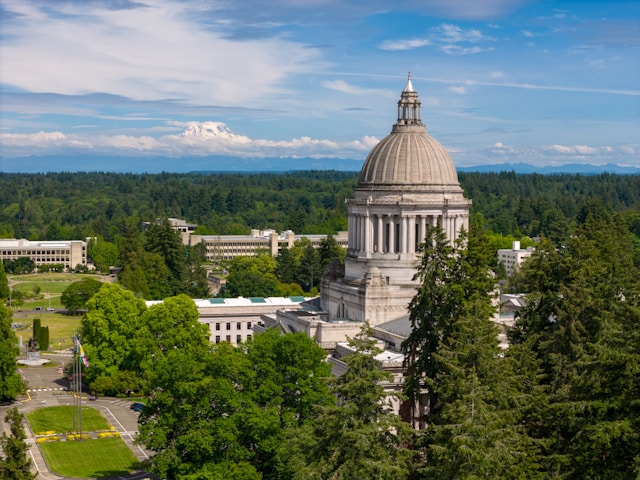
Photo by Nils Huenerfuerst on Unsplash