
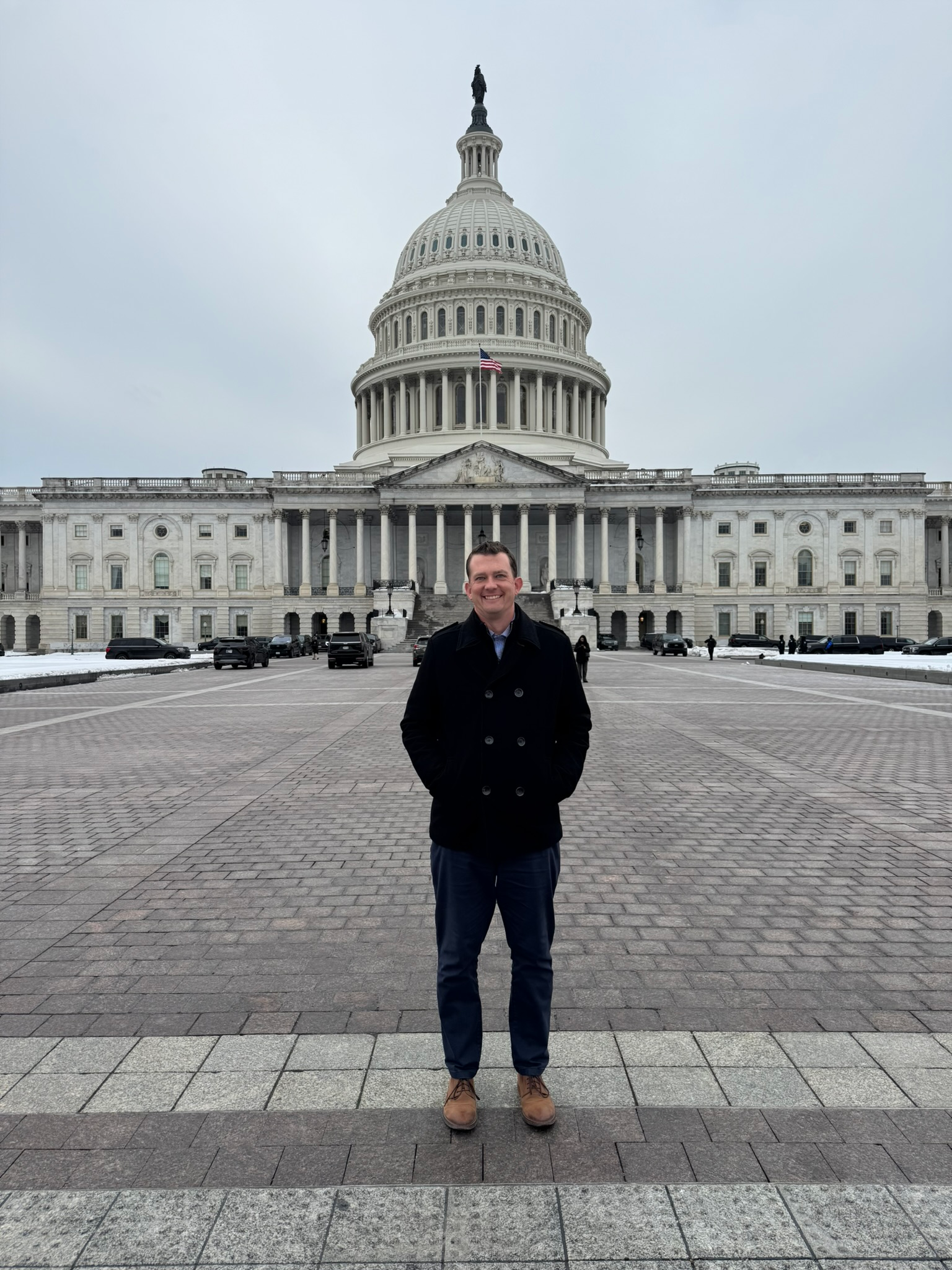
I spent the past week in Washington, DC, advocating for students in meetings with multiple Congressional offices and federal agencies.
When we arrived, we weren’t even sure if the agency meetings would happen, due to the government shutdown. The votes to reopen came on Tuesday. Our time with Rep. Newhouse that day turned into a walking meeting as he went between a hearing to a floor vote on one of the procedural issues leading up to final passage.
Those funding bills were important for students across the United States. At the time we were building our local school district budget this past spring, there was lots of talk in DC about massive cuts to programs like Title I and Title II, which we rely on to provide supports for students in poverty, as well as for teacher training. The funding bills passed on Tuesday maintained all those investments for at least the next fiscal year (along with the IDEA funds that support students receiving special education services). As we said to staff and members, it might have been the first time in history that education stakeholders came to DC to thank Congress for flat funding.
Our group had a smaller crew than usual this year, due to the persistent financial challenges facing school districts across Washington state. I attended due to my role as past president of WSSDA, the state association for school directors. Along with our executive director, we were the only Eastern Washingtonians on the trip. We had a cordial meeting with Rep. Baumgartner’s staff. One of the things I tried to communicate to both Eastern Washington offices is how damaging the federal tax credits for education contained within H.R. 1 could be to small, rural districts, if public schools can’t access those resources and the whole thing becomes a backdoor voucher program. It was not an easy conversation on which to find common ground, but we have to keep raising the issue to protect rural communities and their schools.
Our next meeting was with staff to Rep. Gluesenkamp Perez, one of the leading proponents in Congress for expanding career technical education (CTE) opportunities throughout K-12 education. We thanked her profusely for her work to reauthorize the Secure Rural Schools program, a critical support for districts that contain lots of federal timber lands.
The next day began with a visit to the Department of Agriculture, for a meeting with individuals from the Food and Child Nutrition team. Following an in-depth discussion about healthy school meals, I asked where the Department might be headed next in ensuring children who should qualify for free school meals don’t get lost in the paperwork shuffle following the many changes to SNAP and Medicaid that were passed last year. We’ve made so much progress on reducing the administrative burden around school meals, which lets districts spend money on feeding kids rather than collecting and managing forms. I have concerns about where that will be headed next.
From there we were off to meetings with the Department of Education and both Washington senators. It really was a busy week for Congress, so special thanks to Sen. Cantwell for popping in at the end of our meeting for some good discussion about the ways Washington school districts are innovating with CTE programs.
This was my fourth year making the DC advocacy trip for Washington schools. I’m always reminded of the differences with Olympia. Everything in DC is slower, and much more remote, but even small changes at that level can have huge impacts for students across the country. And as always, it takes working with everyone on every side to make any progress on making things better for kids.